
Getting to Know the Best Home Lift Brand | Ascenda Minivator and the Story Behind Cibes Lift Group
Ascenda Minivator Home Lift Brand with a Real Review from Jirayu Na Ranong
TL;DR
Ascenda Minivator is a home lift designed specifically for two-storey houses. It uses a screw-drive system, so it does not need a lift pit or a machine room. This makes it suitable for existing homes, renovations, and houses with limited space.
The concept behind Ascenda is closely linked to Cibes Lift Group, a global leader from Sweden with more than 75 years of experience in home lift innovation. Cibes focuses on accessibility, safety, and designs that blend into real homes rather than commercial buildings.
In short, Ascenda Minivator is built for homeowners who want better mobility, higher safety, and long-term usability without major construction work.

Intro About “Ascenda Lift”
As two-storey homes become more common, many homeowners are now looking at home lifts not as a luxury, but as a practical upgrade. Convenience, safety, and long-term usability matter more than ever, especially for families with elderly members or wheelchair users.
One name that often comes up in architectural and renovation circles is Ascenda Lift, also known as Ascenda Minivator. In Thailand, interest in this brand has grown quickly over the past few years.
Still, a common question remains:
Who exactly is Ascenda? Where does the technology come from? And is it truly reliable?
To answer that properly, we need to look at the bigger picture. Behind Ascenda sits a global home-lift pioneer from Sweden: Cibes Lift Group. This company has spent decades shaping how modern home lifts are designed, installed, and used.
This article walks you through everything in one place. Ascenda, Minivator, Cibes Lift Group, Cibes Symmetry, and how to choose a home lift that fits real homes, not just brochures.


Why Have Home Lifts Become So Important Today?
Not long ago, lifts were associated with hotels, offices, or high-rise buildings. Homes were different. Stairs were simply accepted as part of daily life.
That mindset has changed, and for good reason.
Several trends are driving the growth of home lifts:
- Modern home design focuses more on accessibility for all ages
- The number of multi-generation households is rising
- Two-storey homes often come with steep staircases and limited space
- Homeowners now value safety and quality of life more than before
- New home lifts no longer require a pit or machine room and can be installed after construction
Together, these factors have created a fast-growing home lift market. This is exactly where Ascenda Minivator has gained attention.
Who Is Ascenda Lift / Ascenda Minivator?
Ascenda is a home lift brand designed specifically for two-storey residential homes. The key idea is simple but powerful: easy installation, minimal construction work, and a lift that actually feels at home inside a house.
Ascenda lifts can be installed even after the house is completed, making them popular for renovation projects as well.
The core philosophy behind Ascenda is clear:
A home lift should be functional, safe, and visually compatible with the home. Not an industrial machine dropped into a living space.

What Makes Ascenda Stand Out?
Ascenda Minivator focuses on practical features that matter in real homes:
- Screw & nut drive system, no cables and no hydraulics
- No lift pit required
- No machine room required
- Typical installation time of around 5 to 7 days
- Multiple size options from S to XL, including wheelchair-friendly models
- Automatic doors, handrails, foldable seats, ramps, and full safety systems
- Suitable for detached houses, renovated homes, and elderly users
A key detail often overlooked is this: Ascenda is not a generic lift produced without context. Its design philosophy is closely linked to a global leader in home lift innovation, Cibes Lift Group.
The Background of Ascenda: Cibes Lift Group
To understand Ascenda’s quality, it helps to understand the company that shaped the technology behind it.
Cibes Lift Group is one of Europe’s pioneers in home lift development and has influenced residential lift design worldwide.
A Brief History of Cibes Lift Group
- Founded in 1947 in Sweden by engineer Bertil Svedberg
- Initially produced lifting equipment and basic lift systems
- Developed low-speed home lifts using screw-drive technology in the 1960s and 1970s
- Expanded across Europe, Asia, and North America
- Today, active in more than 70 countries
- Operates a major manufacturing facility in Gävle, Sweden
- Driven by the vision: Accessibility for Everyone
Cibes did more than build lifts. The company helped redefine what a home lift could be, shifting it from a complex machine to a natural part of everyday living.
Core Strengths of Cibes That Influence Brands Like Ascenda Home Lift
Several technical and design principles developed by Cibes form the foundation of Ascenda-style home lifts.
1. Screw-Drive Technology
This system avoids cables and hydraulics, reducing maintenance needs while offering smooth, quiet movement and strong safety performance.
2. Minimal Structural Impact
No pit and no machine room mean fewer building modifications. This makes installation possible in many existing homes.
3. Home-Centered Design
Glass panels, automatic doors, and modern control panels help the lift blend into interior design rather than dominate it.
4. Accessibility First
Safety sensors, ramps, foldable seating, obstruction detection, and emergency controls are all designed with elderly and wheelchair users in mind.
5. International Safety Standards
Cibes lifts comply with EN, ASME, ISO, and ADA-related standards, showing that home lifts can meet serious safety expectations.
Cibes Symmetry and the Expansion into the US Market
As the group expanded, Cibes partnered with experienced home-lift companies in the United States, leading to the creation of Cibes Symmetry.
Cibes Symmetry combines:
- Swedish engineering principles
- Deep experience in the North American accessibility market
The result is a broader portfolio covering residential lifts, commercial solutions, and dedicated accessibility lifts. This move signals one thing clearly: the home lift market is growing, and innovation is not slowing down.
What Does Ascenda Gain from Cibes?
While Ascenda has its own identity, many of its strengths reflect the Cibes approach:
- Screw-drive systems with no pit requirement
- Space-efficient design
- Focus on retrofitting existing homes
- Visual compatibility with interior design
- Strong emphasis on elderly and accessibility use
In short, Ascenda builds on proven global concepts and adapts them for small to mid-sized homes, especially in Asian markets like Thailand.

Who Is Ascenda Best Suited For?
Ascenda Minivator is a strong fit for:
- Standard two-storey homes that need a lift without major renovation
- Homes with elderly residents or wheelchair users
- Families prioritizing safety over stairs
- Households looking to improve long-term quality of life
- Renovation projects
- Homes that want a lift that looks good, not out of place
How to Choose the Right Home Lift Brand
Before choosing any home lift, a few practical checks can save you from costly mistakes:
- Be clear about the main purpose: convenience, safety, accessibility, or all three
- Choose brands that meet recognized safety standards
- Look beyond price. Maintenance and after-sales service matter
- Make sure spare parts and trained technicians are available locally
- Pit-less and machine-room-less designs often reduce renovation costs
- For elderly use, check safety sensors, emergency call systems, seating, and ramps
Final Summary: Where Does Ascenda Stand in the Home Lift World?
Ascenda Lift, also known as Ascenda Minivator, exists to serve real homes, not commercial buildings.
It uses screw-drive technology, avoids pits and machine rooms, and can be installed in completed houses. Its design philosophy is closely connected to Cibes Lift Group, a Swedish leader with more than 75 years of experience.
With the expansion into the US market through Cibes Symmetry, the group continues to push home lift innovation forward.
In that context, Ascenda is not just another home lift brand. It represents a practical, safety-focused solution designed to support everyday life in modern two-storey homes.
FAQ: Common Questions About Ascenda Minivator and Home Lifts
1. What is Ascenda Minivator?
Ascenda Minivator is a home lift designed for private houses, especially two-storey homes. It focuses on easy installation, compact size, and safe daily use rather than speed or heavy-duty commercial use.
2. Is Ascenda a real brand or just a local name?
Ascenda is a residential lift brand developed using design and technology principles from Cibes Lift Group. While Ascenda is positioned for specific markets, its core technology is based on proven European home lift systems.
3. What type of drive system does Ascenda use?
Ascenda uses a screw and nut drive system. This means there are no cables and no hydraulic oil. The system is known for stability, smooth movement, and lower maintenance needs.
4. Does Ascenda Minivator need a lift pit or machine room?
No. One of the main advantages of Ascenda Minivator is that it does not require a pit or a machine room. This reduces construction work and makes installation possible in completed homes.
5. Can Ascenda be installed in an existing house?
Yes. Ascenda Minivator is commonly installed in houses that are already built, including renovation projects. This is one of the reasons it is popular in two-storey homes.
6. Is Ascenda suitable for elderly users or wheelchair users?
Yes. Ascenda offers sizes and configurations that support elderly users and wheelchair access. Features may include automatic doors, handrails, ramps, safety sensors, and emergency controls.
7. How long does installation usually take?
On average, installation takes about 5 to 7 days, depending on site conditions and lift configuration. This is significantly faster than traditional elevator installations.
8. How many people can Ascenda Minivator carry?
Capacity depends on the model size. Smaller models are suitable for standing users, while larger models can accommodate wheelchairs and an accompanying person.
9. Is a home lift like Ascenda safe?
Ascenda follows international safety concepts developed by Cibes, including compliance with standards such as EN and ASME. Safety systems include obstruction sensors, emergency stop buttons, and backup safety features.
10. How is Ascenda different from commercial elevators?
Ascenda is designed for low-speed residential use. It prioritizes safety, comfort, and home-friendly design rather than high speed or high traffic capacity.
Frequently Asked Questions About Ascenda Minivator
1. What is Ascenda Minivator?
Ascenda Minivator is a home lift designed for private houses, especially two-storey homes. It focuses on easy installation, compact size, and safe daily use rather than speed or heavy-duty commercial use.
2. Is Ascenda a real brand or just a local name?
Ascenda is a residential lift brand developed using design and technology principles from Cibes Lift Group. While Ascenda is positioned for specific markets, its core technology is based on proven European home lift systems.
3. What type of drive system does Ascenda use?
Ascenda uses a screw and nut drive system. This means there are no cables and no hydraulic oil. The system is known for stability, smooth movement, and lower maintenance needs.
4. Does Ascenda Minivator need a lift pit or machine room?
No. One of the main advantages of Ascenda Minivator is that it does not require a pit or a machine room. This reduces construction work and makes installation possible in completed homes.
5. Can Ascenda be installed in an existing house?
Yes. Ascenda Minivator is commonly installed in houses that are already built, including renovation projects. This is one of the reasons it is popular in two-storey homes.
6. Is Ascenda suitable for elderly users or wheelchair users?
Yes. Ascenda offers sizes and configurations that support elderly users and wheelchair access. Features may include automatic doors, handrails, ramps, safety sensors, and emergency controls.
7. How long does installation usually take?
On average, installation takes about 5 to 7 days, depending on site conditions and lift configuration. This is significantly faster than traditional elevator installations.
8. How many people can Ascenda Minivator carry?
Capacity depends on the model size. Smaller models are suitable for standing users, while larger models can accommodate wheelchairs and an accompanying person.
9. Is a home lift like Ascenda safe?
Ascenda follows international safety concepts developed by Cibes, including compliance with standards such as EN and ASME. Safety systems include obstruction sensors, emergency stop buttons, and backup safety features.
10. How is Ascenda different from commercial elevators?
Ascenda is designed for low-speed residential use. It prioritizes safety, comfort, and home-friendly design rather than high speed or high traffic capacity.
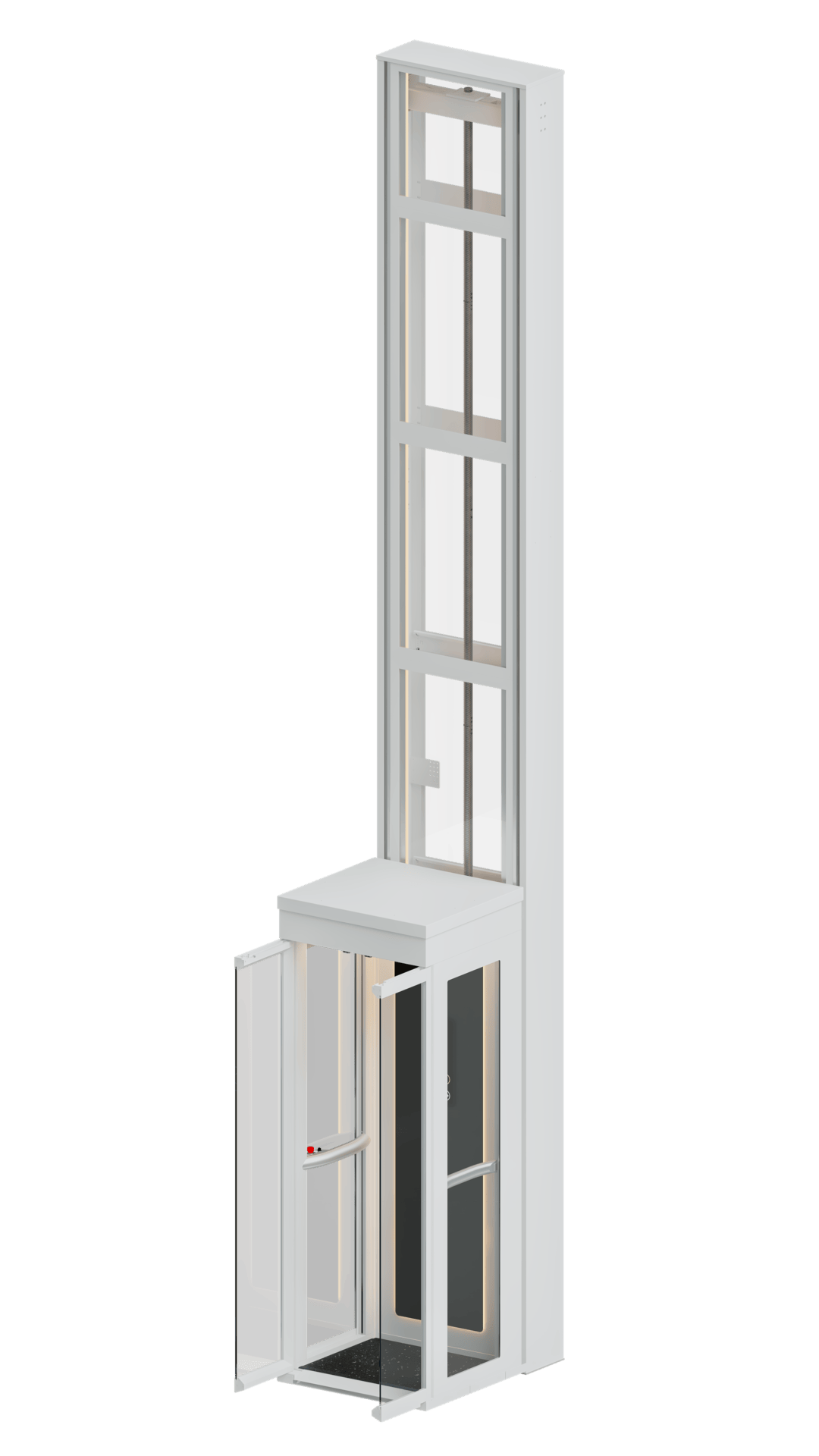


SMART HOME LIFT WORLD CLASS AND BE INCREDIBLY SAFE
ASCENDA MINIVATOR – Safety World Class



Ascenda Minivator are Elevator and Escalator in accordance with the America Standard (ASME A17.1:2019), ADA Compliant elevators and Canada Standard (CSA B44:2019) by the notified body Intertek.

Ascenda Minivator is quality management system with ISO9001:2015 and Environmental management systems with ISO14001:2015 by TÜV Rheinland


Meet our Showroom!

